What Next After A/L? A Complete Career Guide for Sri Lankan Students (2026)
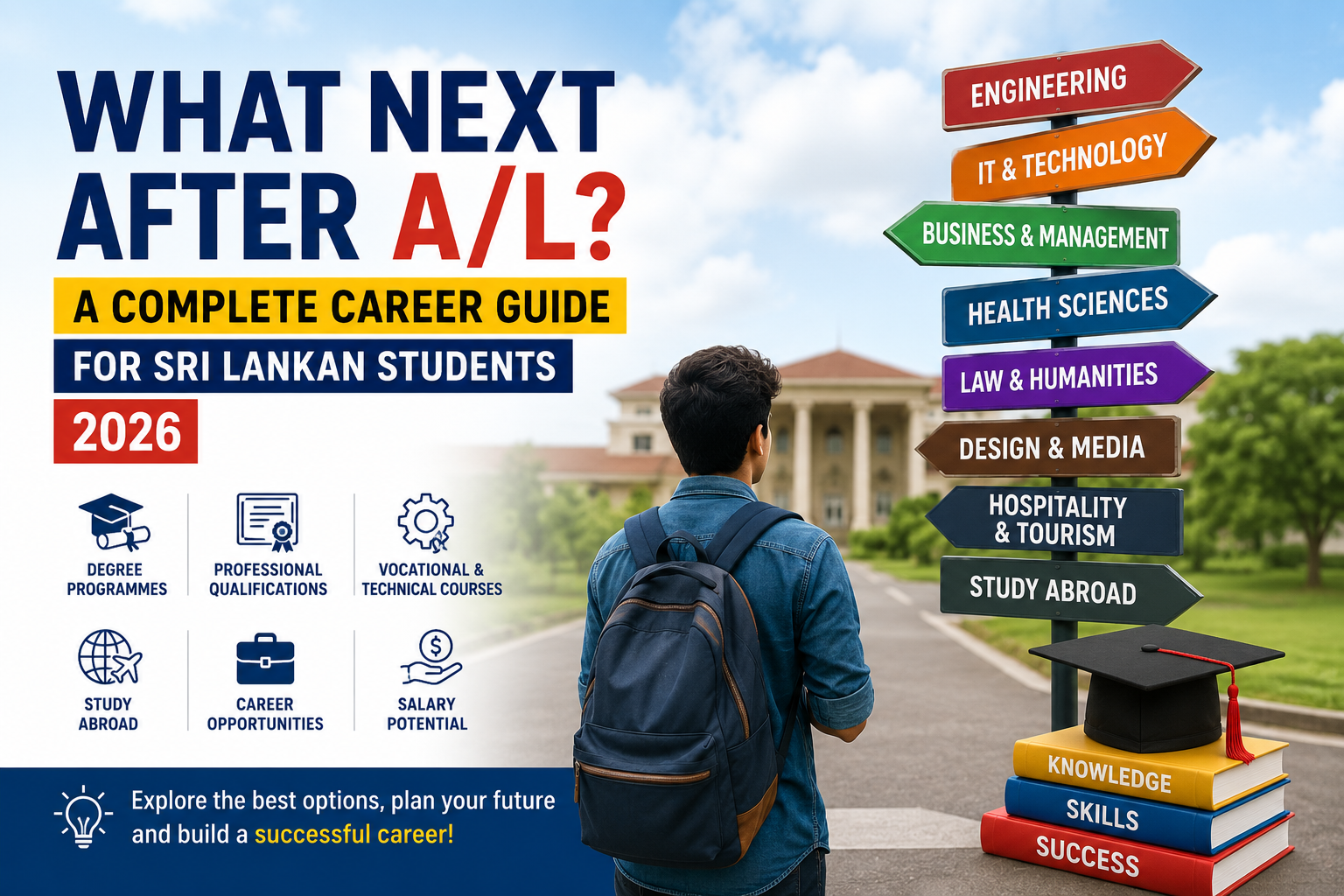
What Next After A/L? A Complete Career Guide for Sri Lankan Students (2026)
What Next After A/L? A Complete Career Guide for Sri Lankan Students (2026)
Introduction
Completing the G.C.E. Advanced Level (A/L) examination is a major milestone for every student in Sri Lanka. Once the exams are over, the next question is often, "What next after A/L?" While some students plan to enter state universities, others explore private higher education, professional qualifications, vocational training, or employment opportunities. In 2026, students have more career pathways than ever before. Choosing the right option depends on your interests, strengths, career goals, and future job market demand. This guide explores the best options available after A/Ls, helping Sri Lankan students and parents make informed decisions for a successful future.
Why Choose the Right Career Path After A/L?
The decisions you make after A/L can shape your future education, career, and financial stability. Instead of choosing a path based solely on exam results, consider your interests, skills, and long-term ambitions.
Choosing the right pathway can help you:
- Build a rewarding career
- Gain industry-relevant skills
- Increase your earning potential
- Access local and international job opportunities
- Adapt to future changes in the workplace
With many educational options available in Sri Lanka today, every student can find a pathway that suits their goals.
What Are the Most Popular Career Guide Options?
Students who complete A/L examinations can choose from several higher education and career pathways.
Some of the most popular options include:
- State university degree programmes
- Private university degrees
- Professional qualifications such as ACCA, CIMA, CIM, and AAT
- Information Technology and Computing courses
- Engineering programmes
- Healthcare and Nursing courses
- Hospitality and Tourism Management
- Vocational and NVQ qualifications
- Entrepreneurship and business start-ups
- Study abroad programmes
Each pathway offers different career opportunities depending on your interests and future plans.
Career Guide Options Available After O/Ls
Although this guide focuses on students after A/Ls, those who complete O/Ls also have several opportunities.
Popular options after O/L include foundation programmes, diploma courses, certificate programmes, vocational training, English language courses, graphic design, software development, hospitality training, and technical education. Many students later continue these qualifications into degree programmes, allowing them to progress steadily toward professional careers.
Career Guide Options Available After A/Ls
Students who complete A/Ls have multiple pathways available.
Those with competitive Z-Scores may enter state universities to study medicine, engineering, management, science, law, agriculture, or arts.
Students who prefer private education can pursue internationally recognized degrees in Business Management, Information Technology, Computer Science, Psychology, Engineering, Nursing, Accounting, Marketing, and many other fields.
Professional qualifications remain an excellent choice for careers in finance, accounting, marketing, and business. Vocational education provides practical skills for technical careers, while entrepreneurship is becoming increasingly popular among young Sri Lankans looking to build their own businesses.
The best option depends on your career goals, budget, and preferred learning style.
Subjects Studied in Career Development Programmes
Subjects vary depending on the programme you choose. However, many higher education courses include areas such as:
- Business Management
- Accounting and Finance
- Marketing
- Computer Science
- Artificial Intelligence
- Cybersecurity
- Data Analytics
- Engineering
- Healthcare
- Psychology
- Communication Skills
- Leadership
- Project Management
- Entrepreneurship
These subjects prepare students with both technical knowledge and workplace skills.
Benefits of Choosing the Right Career Path
Selecting the right educational pathway provides long-term advantages.
Graduates benefit from improved employment opportunities, higher earning potential, professional recognition, and greater career flexibility. Higher education also develops valuable soft skills such as communication, teamwork, leadership, and critical thinking. Many internationally recognized qualifications also provide opportunities to work or study overseas.
Investing in the right education today can create better career prospects tomorrow.
Future of Careers in Sri Lanka
The employment market in Sri Lanka continues to evolve with advances in technology and globalization.
Industries expected to grow significantly include Information Technology, Artificial Intelligence, Cybersecurity, Healthcare, Digital Marketing, Renewable Energy, Logistics, Business Analytics, Financial Technology (FinTech), and Tourism.
Students should choose qualifications that remain relevant and adaptable as industries continue to change over the coming years.
Impact of AI and Technology on Careers
Artificial Intelligence is transforming almost every profession. Rather than replacing workers entirely, AI is helping professionals become more productive by automating repetitive tasks and improving decision-making.
Future employers will increasingly value graduates who understand AI tools alongside skills such as creativity, communication, leadership, and problem-solving. Digital literacy and continuous learning are becoming essential for career success in Sri Lanka and internationally.
Study Abroad Opportunities Through Higher Education
Many Sri Lankan students choose to continue their education overseas after A/Ls.
Popular destinations include Australia, the United Kingdom, Canada, New Zealand, Malaysia, Singapore, Ireland, and Germany.
Students can pursue foundation programmes, bachelor's degrees, diploma-to-degree pathways, and university transfer programmes. International education provides global exposure, practical learning experiences, and stronger career opportunities both overseas and in Sri Lanka.
Career Opportunities After Completing Higher Education
Completing higher education opens doors to careers across many industries.
Popular career options include:
- Software Engineer
- Data Analyst
- AI Engineer
- Cybersecurity Specialist
- Accountant
- Financial Analyst
- Marketing Executive
- Digital Marketing Specialist
- Civil Engineer
- Nurse
- Teacher
- Business Analyst
- Human Resource Executive
- Project Manager
- Entrepreneur
Many professionals also work remotely for international companies, creating additional earning opportunities while living in Sri Lanka.
Salary Potential in Sri Lanka
Salary levels vary depending on qualifications, experience, and industry.
In 2026, entry-level graduates generally earn between LKR 70,000 and LKR 150,000 per month. IT professionals, engineers, accountants, and healthcare specialists often earn considerably more with experience. Professionals holding internationally recognized qualifications and strong English communication skills usually enjoy faster career progression and higher salaries.
Skills Developed Through Higher Education
Higher education develops more than academic knowledge. Students also build essential workplace skills that employers highly value.
These include:
- Critical thinking
- Communication
- Leadership
- Teamwork
- Problem-solving
- Digital literacy
- Time management
- Research skills
- Adaptability
- Professional ethics
These transferable skills help graduates succeed across different industries throughout their careers.
Q&A Section
What is the best option after A/L in Sri Lanka?
The best option depends on your interests, career goals, and A/L results. Students can choose state universities, private universities, professional qualifications, vocational education, or study abroad programmes.
Can I study abroad after completing A/Ls?
Yes. Sri Lankan A/L qualifications are accepted by many universities in countries such as Australia, the UK, Canada, Malaysia, and New Zealand.
Which careers are most in demand in Sri Lanka?
Technology, healthcare, engineering, finance, AI, cybersecurity, digital marketing, logistics, and business analytics continue to have strong demand.
Are professional qualifications worth studying after A/L?
Yes. Qualifications like ACCA, CIMA, CIM, and AAT are highly respected by employers and often lead directly to professional careers.
Can I get a good job without entering a state university?
Absolutely. Many successful professionals graduate from private universities, vocational institutes, and internationally recognized professional programmes.
How important are AI skills for future careers?
AI skills are becoming valuable across almost every industry. Understanding AI tools alongside technical and communication skills will improve future employability.
How should I choose the right career after A/L?
Consider your interests, strengths, industry demand, earning potential, and long-term career goals before selecting your educational pathway.
Final Conclusion
If you are wondering what next after A/L, remember that there is no single path to success. Whether you choose a state university, private degree, professional qualification, vocational training, entrepreneurship, or study abroad programme, your success depends on your commitment to learning and developing the right skills. As technology and Artificial Intelligence continue to reshape industries, students who stay adaptable and continuously improve their knowledge will have the best career opportunities. Choose a pathway that matches your passion and goals, and you will be well prepared for a successful future in Sri Lanka and beyond.
Explore more After A/L Courses in Srilanka
Click here to findWhat you can do after A/L Exam
Click here to findAfter A/L courses in Sri Lanka
Click here to findAdvanced Level Subjects in Sri Lanka
Click here to findList of Advanced Level Subjects
Click here to findHow to Select A/L Subjects – What Are the A/L Streams
Click here to findAdvanced Level Subjects Combination
Click here to findBest A-Levels For University Courses
Find Private Universities in Sri Lanka to start your future course today
Visit this link for accurate information on courses in Sri Lanka and additional details about the institutes.
Feel free to let us know if you need any more details! or visit studyway.lk for more details
Call 0117662626
Recommended Institutes
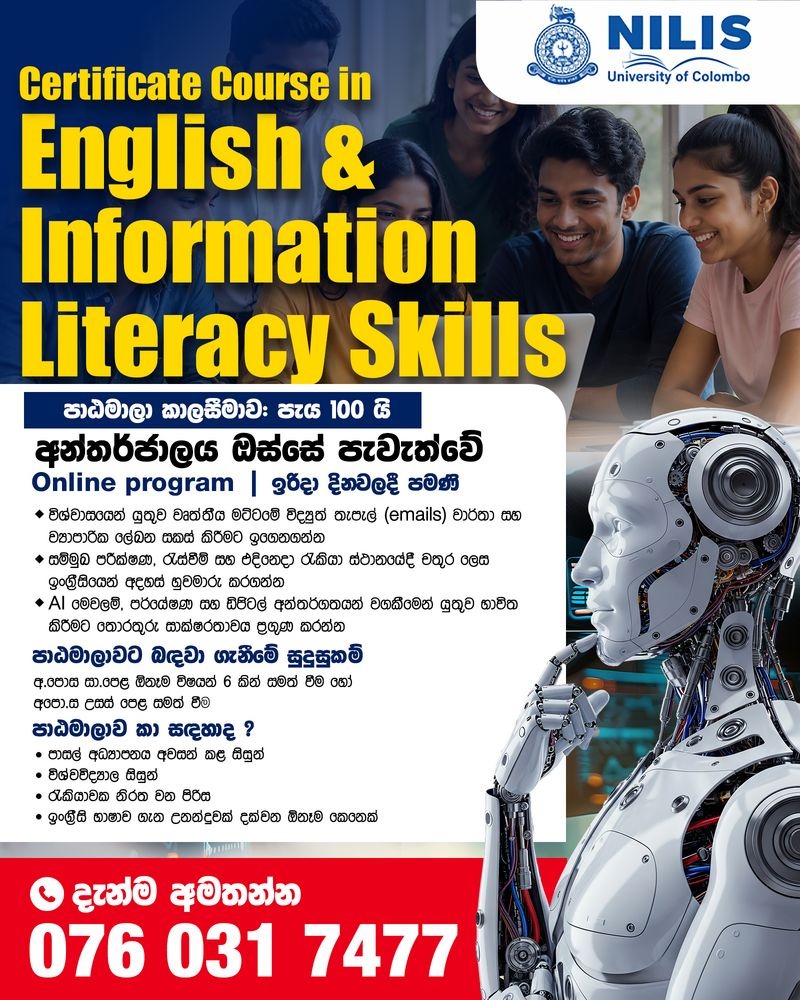
National Institute of Library & Information Science (NILIS) - University of Colombo
Latest Intakes